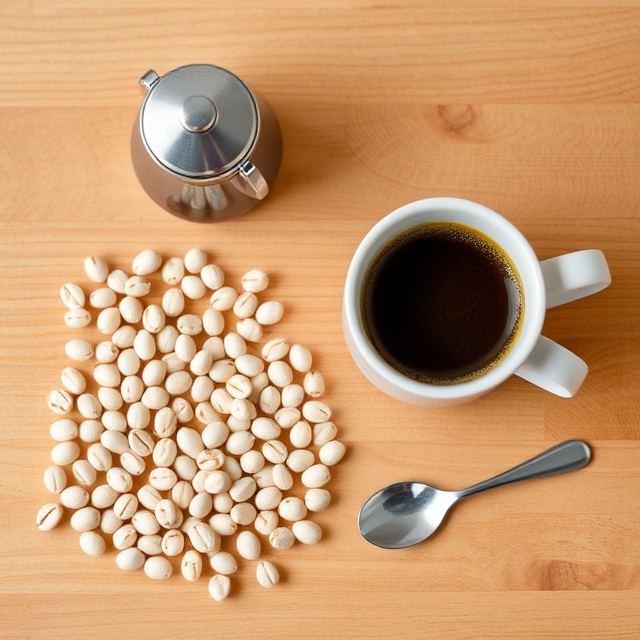
If you are trying white roast coffee for beginners for the first time, the pale beans can look surprisingly different from the coffee you normally see in stores. Their unusual color comes from an exceptionally light roasting process, which also affects their texture, flavor, and brewing behavior.
For someone new to this style, the important point is simple: white roast coffee is still coffee. The difference is how far the beans are taken through the roasting process.
What Is White Roast Coffee?
White roast coffee refers to coffee beans that have been roasted very lightly. Traditional coffee beans are heated until they develop progressively deeper brown colors, while white roast coffee is stopped much earlier.
Because of this limited roast development, the beans can retain a pale yellow, beige, or light tan appearance.
The term can sometimes be confusing because “white coffee” is also used for regional coffee drinks and coffee served with milk. In the context of roast level, however, white roast coffee describes the appearance and development of the beans themselves.
Why Does White Roast Coffee Look So Different?
Coffee begins as a green seed inside a coffee cherry. Before roasting, the beans have a pale greenish appearance.
Heat gradually transforms them. Moisture leaves the beans, their structure changes, and roasting reactions produce the familiar brown colors associated with brewed coffee.
White roast coffee undergoes much less of this development. As a result, it remains visibly lighter than conventional light, medium, or dark roasts.
That pale appearance is therefore a useful clue about how the beans were processed.
How Is White Roast Coffee Different From a Regular Light Roast?
White roast coffee and light roast coffee are related, but they are not necessarily identical.
A light roast has undergone relatively limited roasting compared with medium or dark coffee. White roast coffee represents an even earlier and less developed roast style.
The terminology can vary between producers, so roast descriptions should always be considered alongside the product’s brewing instructions.
A simple way to understand the progression is:
- Green coffee: unroasted beans
- White roast coffee: exceptionally light roast development
- Light roast: relatively light roasting
- Medium roast: more developed brown color and flavor
- Dark roast: substantial roast development and a much darker appearance
The exact boundaries are not universal, but the general relationship between roasting time, development, and color is useful for beginners.
What Does White Roast Coffee Taste Like?
The flavor can be one of the biggest surprises for a first-time drinker.
White roast coffee does not simply taste like a weaker dark roast. Its limited roast development means it can have a distinctly different flavor profile.
Depending on the coffee and brewing method, you may notice nutty, mild, grain-like, or unusual characteristics. It generally does not rely on the heavy smoky or deeply roasted notes that many people associate with darker coffee.
However, roast level is only one part of the final flavor. Bean variety, origin, freshness, grind size, water, brewing method, and extraction all play a role.
For that reason, two white roast coffees can still taste noticeably different from one another.
Are White Roast Coffee Beans Hard to Grind?
Yes, they can be.
Roasting changes the internal structure of coffee beans. As beans undergo more development, they expand and become more porous. Extremely lightly roasted beans have experienced less of that transformation.
Consequently, white roast coffee beans can be unusually dense and hard compared with darker roasted beans.
This is particularly important for beginners who normally use a standard home grinder. Before grinding whole beans, check the producer’s recommendations and make sure your grinder is suitable for the coffee.
For some products, pre-ground coffee may be a more convenient option.
How Do You Brew White Roast Coffee?
White roast coffee can be prepared using familiar brewing methods, but it may require a little experimentation.
Espresso
Espresso depends heavily on grind size, coffee dose, water flow, and extraction. Because very lightly roasted coffee can behave differently from conventional beans, the normal settings on an espresso grinder may not produce the same result.
Make small adjustments rather than changing several variables at once.
Drip Coffee
A drip brewer is a straightforward way to explore white roast coffee. Start with the recommended coffee-to-water ratio and adjust the grind or amount of coffee according to the taste of the finished cup.
French Press
French press brewing provides another accessible option. The coffee grounds steep directly in water before being separated through the press.
Whatever method you choose, follow the product’s specific preparation instructions first.
What Should a First-Time Buyer Look For?
Someone buying white roast coffee for the first time should examine more than the unusual appearance.
Useful information includes:
- Roast level
- Bean variety
- Coffee origin
- Whole-bean or pre-ground format
- Recommended brewing methods
- Flavor description
- Organic certification, if applicable
- Fair Trade certification, if applicable
If you want to explore a product specifically described as white coffee, white roast coffee provides information that can help you understand its roast style and preparation requirements before brewing.
This makes it easier to choose a preparation method that matches the coffee instead of treating it exactly like a conventional dark roast.
Does White Roast Coffee Have More Caffeine?
Caffeine is another area where appearances can be misleading.
A pale bean does not automatically tell you how much caffeine will be present in a finished cup. Caffeine intake depends on factors such as coffee variety, the amount of coffee used, serving size, and brewing method.
Roast level can be part of the discussion, but it should not be used by itself to estimate the caffeine in a particular serving.
If caffeine is an important consideration, look at the product’s serving information and preparation recommendations rather than judging the coffee by its color.
Is White Roast Coffee Good for Beginners?
It can be an interesting choice for anyone who wants to explore coffee beyond familiar medium and dark roasts.
It is especially useful as a learning experience because it demonstrates how strongly roasting can influence coffee’s appearance, texture, aroma, and flavor.
However, expectations matter. Someone who enjoys intense smoky or dark-roasted flavors may find white roast coffee quite different. Someone interested in unusual roast styles may appreciate the contrast.
The goal should not be to expect white roast coffee to imitate another roast. It is better approached as its own style.
Common Questions About White Roast Coffee
Is white roast coffee actually roasted?
Yes. It has been roasted, but to a much lighter degree than conventional coffee.
Is white roast coffee the same as green coffee?
No. Green coffee is unroasted. White roast coffee has undergone a controlled roasting process, although its roast development is exceptionally limited.
Can I use white roast coffee in an espresso machine?
Depending on the product, yes. Espresso can be made with very lightly roasted coffee, but grind, dose, and extraction may need adjustment.
Why are white roast beans so dense?
They have undergone less roasting and expansion than darker beans. This can leave them harder and denser.
Does white roast coffee taste like regular coffee?
It is still coffee, but its flavor can be quite different. Very light roasting allows characteristics that differ from the deeper roasted flavors commonly associated with medium and dark coffee.
A Practical Starting Point
For a first-time drinker, white roast coffee is easiest to understand by focusing on its roast level. Its pale appearance, dense structure, distinctive flavor, and unusual grinding requirements are all connected to the fact that the beans receive much less roast development.
Choose a product with clear preparation guidance, start with a familiar brewing method, and make gradual adjustments as you learn how the coffee responds. That approach lets you experience what makes white roast coffee distinctive without expecting it to behave exactly like a conventional roast.