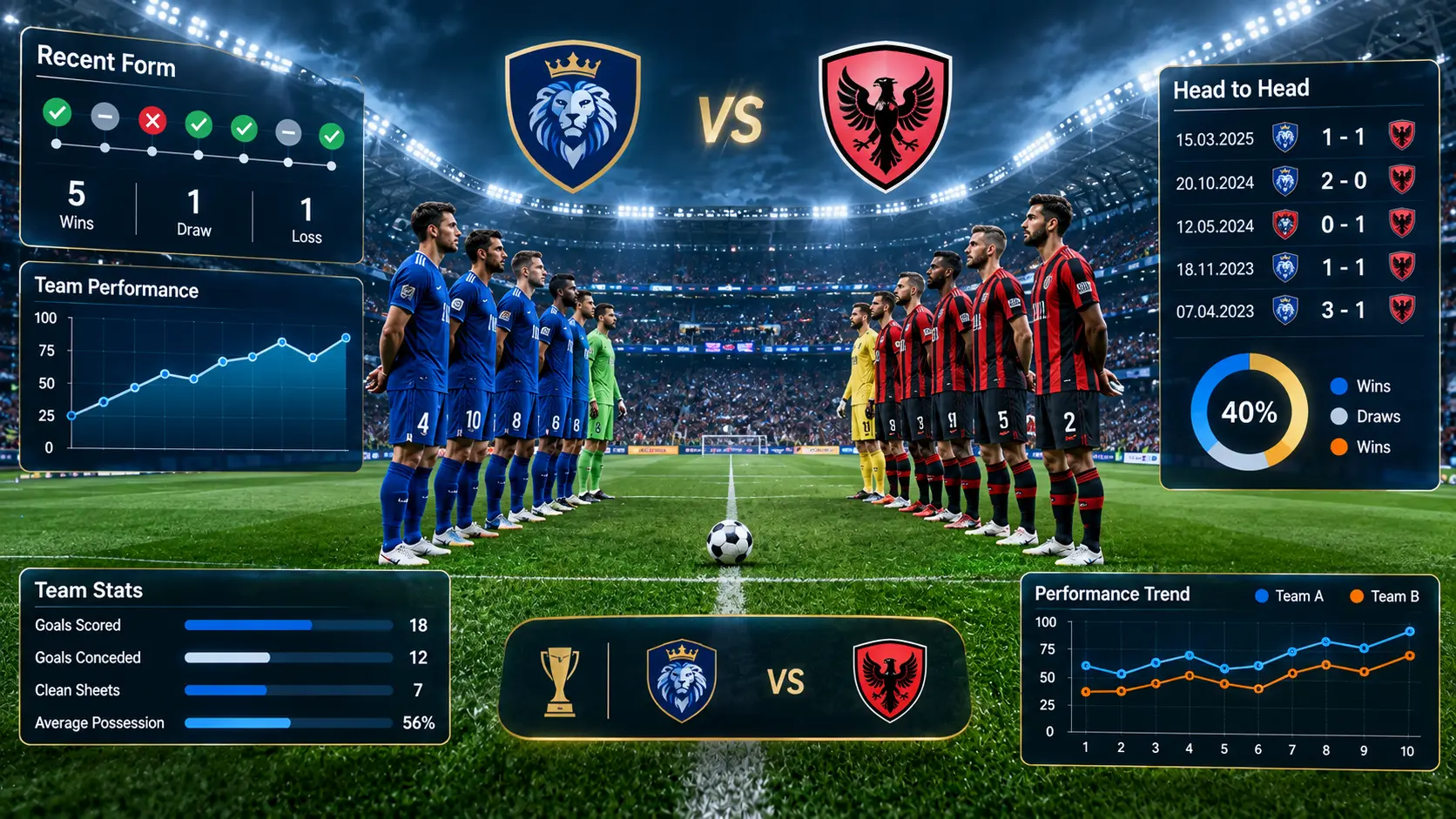
Team form vs H2H is an important comparison in football analysis because both indicators measure different aspects of team performance. Team form describes how a club has performed in recent matches against various opponents, while head-to-head (H2H) records summarize previous encounters between two specific teams.
Both indicators provide valuable historical context. However, neither offers a complete explanation of a team’s current capabilities.
Understanding the differences between recent results and historical matchups helps football enthusiasts interpret statistics more accurately and avoid misleading conclusions.
Team Form vs H2H: Main Differences in Football Statistics
The primary difference between team form and head-to-head records involves the matches they examine. Team form focuses on recent performances, whereas H2H analysis concentrates on previous meetings between particular opponents.
| Team form | Head-to-head (H2H) |
|---|---|
| Examines recent matches | Examines previous meetings between two teams |
| Includes different opponents | Focuses on specific opponents |
| Reflects recent performance trends | Provides historical matchup context |
| Changes frequently | Develops across multiple encounters |
| Influenced by recent circumstances | May include outdated team conditions |
Although these statistics complement each other, their relevance depends on the circumstances surrounding each match.
Team Form Analysis: Understanding Recent Football Results
Team form describes a club’s performance over a selected period, often represented by its latest five or ten matches.
Football publications commonly use three abbreviations to summarize recent results: W for win, D for draw and L for loss.
However, meaningful team form analysis requires more than counting victories and defeats. Goals scored, defensive performances, opposition strength and match circumstances also matter.
For instance, a team that draws against several strong opponents may demonstrate better performances than a club that narrowly defeats weaker opposition.
Therefore, recent results should always be interpreted within their competitive context.
How Recent Team Performance Is Measured
Analysts may consider several indicators when examining recent football form:
- Wins, draws and defeats.
- Goals scored and conceded.
- Clean sheets and defensive consistency.
- Home and away performances.
- Strength of recent opponents.
- Injuries and player availability.
These details provide a broader picture than a simple sequence of W, D and L results.
Head-to-Head Records: Understanding Previous Football Matchups
Head-to-head records, frequently abbreviated as H2H, summarize previous matches between two particular football teams.
These records may include total victories, draws, defeats, goals scored and historical home or away performances.
They can reveal recurring patterns between opponents. For example, one club may historically struggle against another team’s defensive organization or playing style.
Nevertheless, football teams change over time. New managers, player transfers and tactical adjustments can reduce the relevance of older encounters.
A match played several seasons ago may provide limited information about the teams’ present circumstances.
What H2H Football Statistics Can Reveal
Historical matchup statistics can help readers examine:
- Previous wins and defeats between opponents.
- The number of draws in earlier meetings.
- Goals scored by each club.
- Home and away results.
- Repeated scoring or defensive patterns.
However, these figures describe previous matches rather than establish what will happen in the next encounter.
How Football Websites Present Team Form and H2H Data
Digital football publications often present recent results and historical encounters together because they offer different perspectives on sporting performance.
Some websites focus on statistical reporting, while others discuss football predictions and related commercial subjects. For example, bet404.futbol publishes Persian-language football prediction and platform-related information.
When reading such material, it is important to distinguish recorded match results from interpretations or predictions based on those results.
Official competition records, including those associated with the Premier League and other professional leagues, provide useful reference points for confirming historical scores and match outcomes.
Factors That Affect Team Form and H2H Comparisons
Several circumstances can affect how accurately historical statistics describe a team’s current performance.
Home and Away Match Conditions
Football clubs may perform differently depending on where they play. Familiar surroundings, travel requirements and crowd support can influence match conditions.
Consequently, a combined record of home and away results may conceal meaningful differences in performance.
Squad Changes and Player Availability
Injuries, suspensions and player transfers can significantly alter a team’s capabilities.
Historical encounters involving different starting lineups may not accurately represent the strengths or weaknesses of the current squad.
Opposition Strength and Recent Results
Recent form can appear stronger or weaker depending on the opponents involved.
A sequence of difficult fixtures may produce disappointing results despite competitive performances. Conversely, a favorable schedule may create an exaggerated impression of improvement.
Managerial Changes and Tactical Adjustments
A new manager may introduce different formations, playing styles and defensive strategies.
As a result, previous head-to-head statistics may become less representative when either club has experienced significant tactical changes.
Team Form vs H2H: A Practical Football Example
Consider two hypothetical football clubs, Team A and Team B.
Team A has won four of its last five matches. However, Team B has won most of their previous head-to-head encounters.
These statistics appear to suggest conflicting conclusions. Team A demonstrates stronger recent results, while Team B holds the better historical record.
Neither indicator establishes what will happen in their next meeting. The historical record may involve different players and managers, while recent results may reflect differences in opposition quality.
This example demonstrates why team form vs H2H comparisons require contextual interpretation rather than automatic conclusions.
Which Is More Useful: Team Form or H2H Records?
There is no universally superior indicator. Team form generally provides a more recent picture of performance, while head-to-head records offer historical context about specific matchups.
Both have limitations, particularly when the available sample contains relatively few matches.
For a balanced assessment, readers can examine recent results alongside previous encounters, squad availability, opposition strength and current playing conditions.
Moreover, statistical patterns do not establish guaranteed future outcomes. Football involves unpredictable events, and historical performance cannot remove the uncertainty or financial risks associated with gambling.
Conclusion: Understanding Team Form vs H2H Statistics
Team form and head-to-head records offer complementary perspectives on football performance. Recent form highlights how a team has performed against different opponents, while historical encounters reveal previous results between specific clubs.
The team form vs H2H comparison becomes more meaningful when readers consider opposition strength, squad changes, match conditions and the relevance of older data.
Understanding these differences allows football enthusiasts to interpret statistics more thoughtfully without confusing historical patterns with certainty about future results.