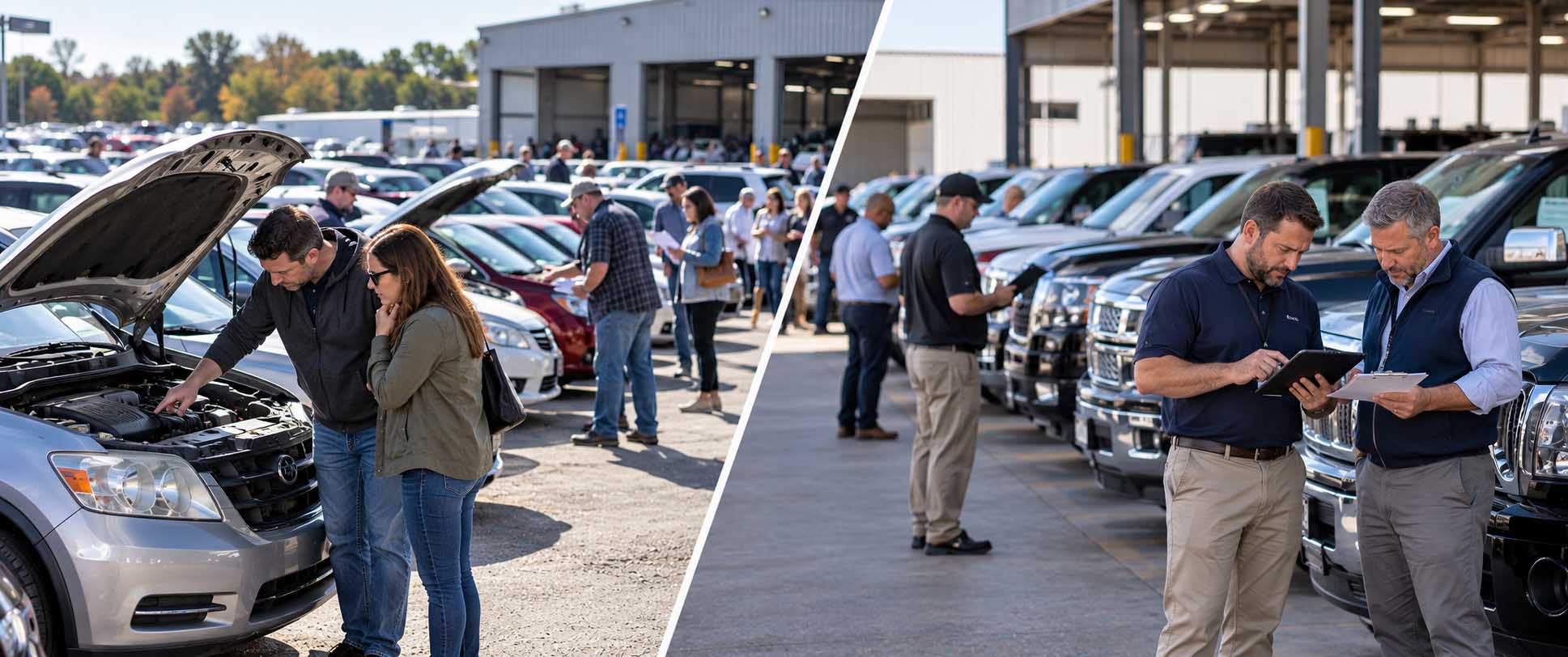
Understanding public vs dealer auctions is important for anyone interested in purchasing vehicles through competitive bidding. Although both auction types allow eligible participants to buy vehicles, their registration requirements, inventory sources, and purchasing rules can differ significantly.
Public car auctions generally allow individual consumers to participate without holding a motor vehicle dealer license. Dealer-only auctions, meanwhile, typically restrict participation to licensed automotive dealers and other approved industry professionals.
However, auction eligibility depends on the provider, applicable state regulations, and the specific vehicle being offered.
Before registering or placing a bid, buyers should confirm which auction category they qualify for and understand the associated purchasing responsibilities.
Understanding Public Car Auctions
Public car auctions are vehicle sales that permit eligible members of the general public to participate. These auctions may take place at physical facilities or through online bidding platforms.
Depending on the auction operator, available vehicles may include dealership trade-ins, government fleet vehicles, repossessed cars, and other used vehicles.
Who Can Participate in Public Auctions?
Individual consumers can generally participate when they satisfy the auction’s registration requirements.
These requirements may include identity verification, minimum age restrictions, account approval, or a bidding deposit.
However, public access does not necessarily mean unrestricted participation.
Some vehicles may have additional eligibility requirements, and certain auctions may impose limitations based on location or vehicle classification.
Therefore, buyers should review the specific auction rules before bidding.
Understanding Dealer-Only Auctions
Dealer-only car auctions primarily serve licensed automotive businesses purchasing vehicles for inventory, resale, or other authorized commercial purposes.
These auctions commonly operate within the wholesale vehicle market.
Participating businesses may include independent used-car dealerships, franchise dealerships, and other eligible automotive industry entities.
Why Do Dealer Auctions Require Licensing?
Dealer-only auctions use participation requirements designed around regulated automotive business transactions.
In many jurisdictions, businesses that regularly purchase and sell vehicles for profit must obtain appropriate dealer licenses.
Auction operators may verify these credentials before granting bidding privileges.
However, licensing requirements differ by state, and holding a business registration alone does not necessarily qualify someone to participate in a dealer-restricted auction.
Public vs Dealer Auctions: Main Differences
The most important distinction involves who is eligible to participate.
However, inventory sources, pricing structures, and purchasing procedures may also differ.
| Feature | Public Car Auctions | Dealer-Only Auctions |
|---|---|---|
| Buyer eligibility | Generally open to qualifying consumers | Usually restricted to licensed dealers |
| Dealer license | Often unnecessary | Commonly required |
| Typical buyers | Individuals and eligible businesses | Automotive industry professionals |
| Inventory | Used, fleet, repossessed, and other vehicles | Primarily wholesale automotive inventory |
| Bidding process | Online or in-person | Online or in-person |
| Fees | Vary by provider | Vary by provider and membership |
| Vehicle condition | Depends on individual listings | Depends on individual listings |
Neither auction category automatically guarantees lower prices, better vehicles, or fewer purchasing risks.
Instead, the actual value depends on vehicle condition, bidding competition, transaction expenses, and available documentation.
Public vs Dealer Auctions: License Requirements
You generally do not need a dealer license to purchase a vehicle through an auction that permits public participation.
However, dealer-only auctions commonly require a valid motor vehicle dealer license or another recognized authorization.
Requirements depend on the state and auction operator.
Can Individuals Get Access to Dealer-Only Auctions?
Some wholesale auction businesses offer participation arrangements involving approved brokers or other authorized intermediaries.
However, these arrangements are not universally available.
Buyers should verify whether an intermediary is properly authorized and understand any additional fees, contractual obligations, and limitations.
Using another person’s dealer credentials without authorization may violate auction rules or applicable laws.
Does Buying Multiple Cars Require a Dealer License?
Purchasing multiple vehicles does not automatically establish a universal licensing requirement.
Instead, state laws may consider factors such as transaction frequency, resale activity, and whether the buyer operates a vehicle-selling business.
Therefore, individuals planning to buy vehicles regularly for resale should consult their state’s motor vehicle licensing authority.
Public vs Dealer Auctions: Participation Requirements
Auction access should be verified before paying membership charges, registration fees, or bidding deposits.
For example, someone researching a provider under the name Auction Center should confirm the website’s current business identity, participation rules, and accepted buyer categories directly rather than assuming that public or dealer-only access is available.
The same principle applies to any unfamiliar auction platform.
Questions to Ask Before Registering
Consider the following:
- Is the auction open to individual consumers?
- Does participation require a dealer license?
- Are there location or residency restrictions?
- Is identity verification required?
- Are registration fees or bidding deposits refundable?
- Can buyers inspect vehicles before bidding?
- What documents are required after winning?
Clear answers help prevent registration problems and unexpected purchasing obligations.
Public vs Dealer Auctions: Price Comparison
Neither public nor dealer-only auctions consistently offer the lowest vehicle prices.
Wholesale auctions may provide dealers with access to vehicles intended for resale. However, professional buyers also compete for desirable inventory.
Public auctions may attract individual consumers seeking personal transportation, which can influence bidding activity.
In addition, the winning bid is not always the final purchase cost.
Buyers should account for auction fees, taxes, transportation, title charges, and potential repairs.
For example, a vehicle purchased for $7,500 with $1,200 in additional expenses has an estimated acquisition cost of $8,700.
Comparing that total with similar vehicles available through other sellers provides a more meaningful measure of value.
How to Compare Total Auction Costs
Before bidding, estimate the complete cost of acquiring the vehicle.
First, identify the auction’s buyer fees and payment requirements. Next, calculate transportation, taxes, title charges, and potential repair expenses.
Then, compare the estimated total with similar used vehicles in your local market.
This approach helps buyers avoid focusing only on an attractive starting bid.
Important Risks at Public and Dealer-Only Car Auctions
Regardless of eligibility, auction buyers should understand the condition and legal status of each vehicle.
Limited Vehicle Inspections
Some auctions provide inspection opportunities, while others rely primarily on photographs and condition reports.
Therefore, buyers should determine whether independent mechanical inspections are permitted.
The Federal Trade Commission’s guidance on buying a used car explains important considerations involving vehicle history, inspections, and purchasing decisions.
As-Is Vehicle Sales
Auction vehicles may be sold under as-is terms, potentially limiting certain contractual protections.
However, applicable consumer protection laws and seller obligations still depend on the circumstances.
Therefore, buyers should read the sale terms carefully before bidding.
Title and Registration Complications
Vehicles may have clean, salvage, rebuilt, or other title classifications.
Buyers should verify ownership documents and registration eligibility before purchasing.
In addition, they should check whether the auction discloses outstanding title issues or documentation requirements.
Choosing Between Public and Dealer Auctions
When comparing public vs dealer auctions, the best choice depends on your buyer eligibility, purchasing goals, and experience.
Public auctions are generally more accessible for individuals purchasing vehicles for personal use.
They may be suitable for buyers who understand auction rules and can evaluate used-vehicle condition.
Dealer-only auctions, meanwhile, are primarily intended for qualified automotive businesses acquiring inventory through wholesale channels.
For someone operating a licensed dealership, wholesale auctions may provide a practical inventory sourcing option.
However, choosing the right auction should involve more than eligibility alone.
Consider vehicle availability, inspection opportunities, transaction costs, and the auction provider’s documented procedures.
When Public Auctions Make Sense
Public auctions may be appropriate for individuals seeking a used vehicle without obtaining a dealer license.
However, buyers should confirm registration eligibility and inspection opportunities before participating.
They should also establish a maximum bidding budget that includes additional purchasing expenses.
When Dealer-Only Auctions Make Sense
Dealer-only auctions may suit licensed automotive businesses that regularly purchase vehicles for resale.
These businesses often have established processes for evaluating inventory, managing transportation, and preparing vehicles for sale.
Nevertheless, wholesale auction purchases still involve financial and operational risks.
Frequently Asked Questions About Car Auctions
Can Anyone Attend a Public Car Auction?
Many public auctions welcome individual consumers, but registration, identification, and other eligibility requirements may apply.
Are Dealer-Only Auctions Cheaper?
Not necessarily. Wholesale pricing can be competitive, but bidding demand, vehicle condition, and additional fees affect the final purchase cost.
Can You Buy a Car at Auction Without a Dealer License?
Yes, when the auction permits public participation and the buyer meets its requirements.
Are Online Car Auctions Always Open to the Public?
No. Some online platforms operate exclusively for licensed dealers or other approved buyers.
What Is the Biggest Difference Between Public and Dealer Auctions?
The main difference is buyer eligibility. Public auctions generally allow qualifying consumers to participate, while dealer-only auctions usually require appropriate automotive business credentials.
Final Thoughts on Public and Dealer Auctions
Understanding public vs dealer auctions helps buyers identify which purchasing channels match their eligibility and intended use.
Public auctions generally provide broader consumer access, while dealer-only auctions primarily support licensed automotive businesses.
However, participation rules vary, and neither category guarantees better prices or vehicle quality.
Before bidding, confirm the auction’s licensing requirements, review its transaction policies, and evaluate the complete purchase cost.
Choosing an appropriate auction begins with understanding who can participate and what responsibilities follow a successful bid.